
What Otodus was
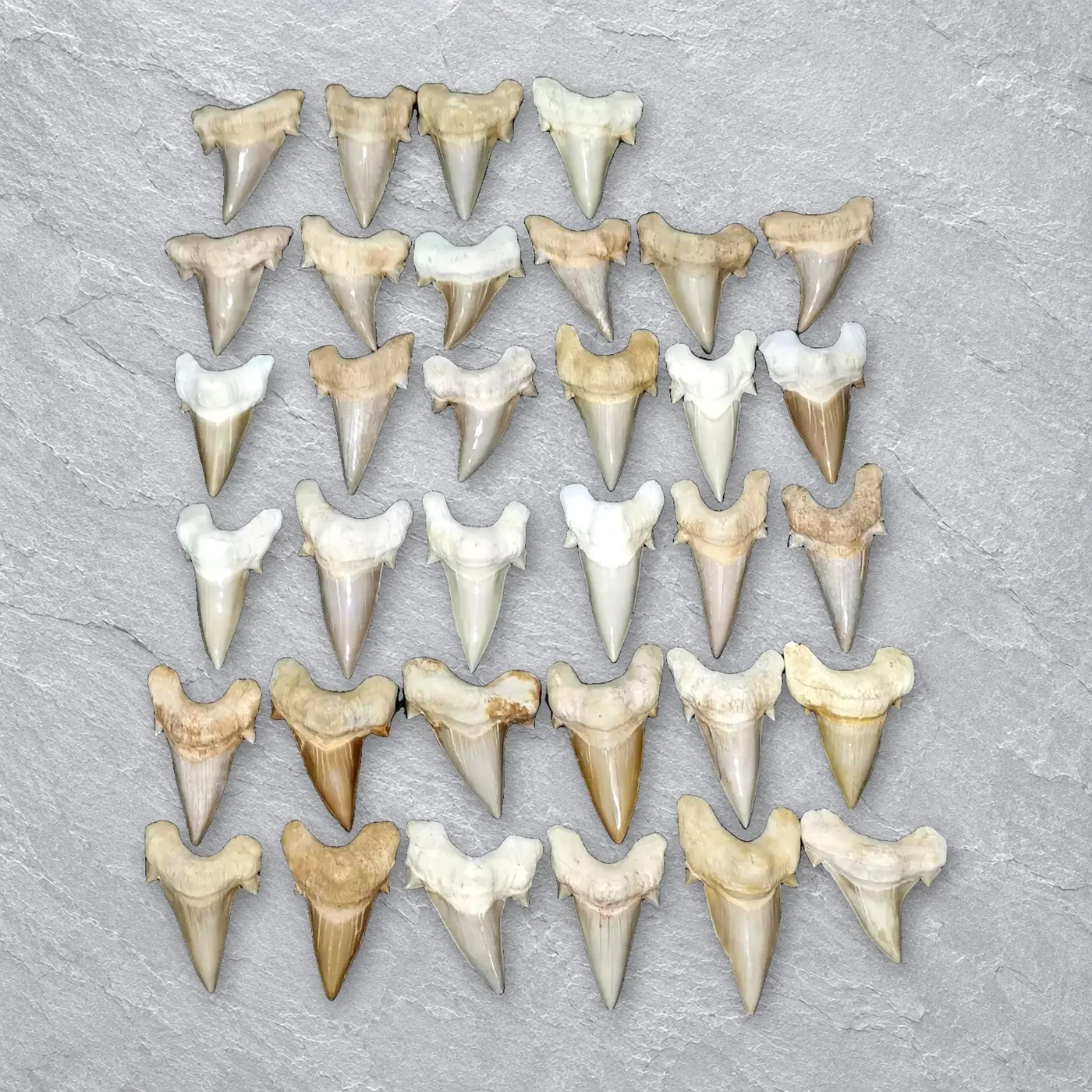
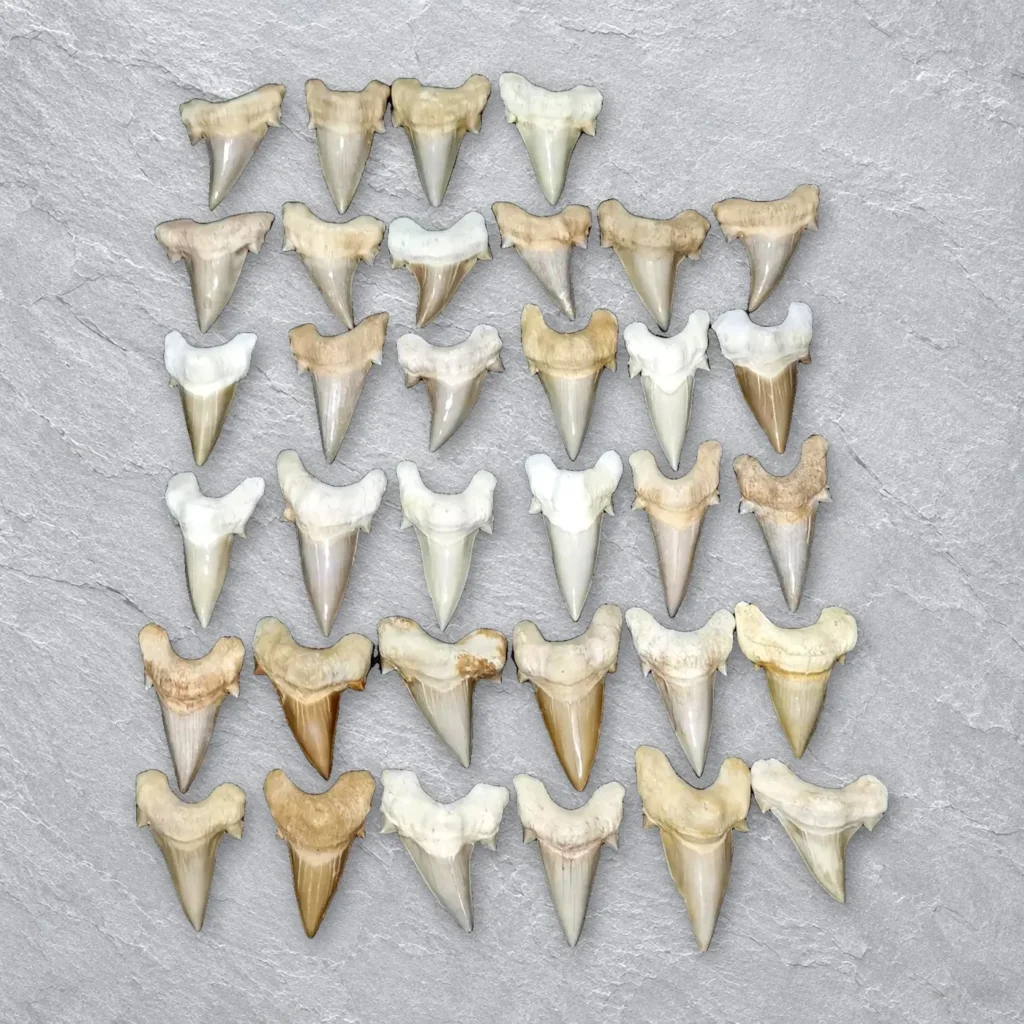
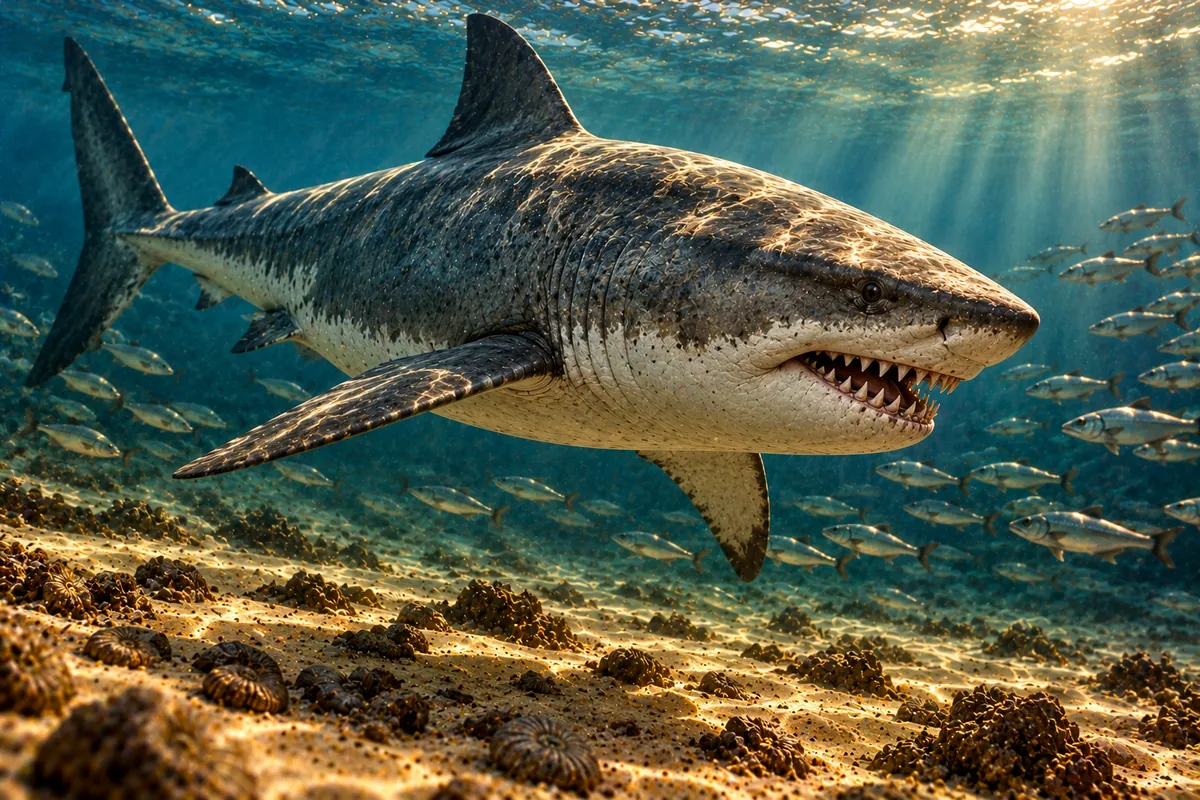
Otodus obliquus was a large lamniform shark of the Paleocene and Eocene. Its teeth are broad, triangular and smooth-edged, with a pair of side cusplets and a thick, strongly lobed root. Siversson and colleagues note that the family Otodontidae is based on Otodus, and they cite O. obliquus from the early Paleogene phosphates of Morocco [2].
In the Oulad Abdoun Basin these teeth occur in the Paleocene and early Eocene part of the phosphate series, a sequence dated by shark biostratigraphy and isotope chemistry [4]. They are among the largest teeth the deposit produces, which makes the Otodus shark tooth the centerpiece of most Moroccan shark-tooth displays.
Otodus and megalodon: getting the relationship right
Megalodon belongs to the same lineage of “megatoothed” sharks, but it lived much later, in the Miocene and Pliocene. In 2017 Shimada and colleagues argued that the megatoothed sharks, including megalodon, should be placed in the genus Otodus so that the genus forms a natural group; under that view megalodon is Otodus megalodon [1]. Older literature, and many dealers, still use the genus Carcharocles for megalodon and its close relatives.
Two points follow for buyers. First, a Moroccan Otodus tooth is not a megalodon tooth and should never be sold as one. Second, “megalodon ancestor” is a fair shorthand: O. obliquus is an early member of the lineage, although the exact sequence of species between it and megalodon is still discussed. Later members of the lineage developed serrated edges, and adult megalodon teeth lack cusplets, which is why the two teeth look so different.
Key facts
| Scientific name | Otodus obliquus |
|---|---|
| Family | Otodontidae (Lamniformes) |
| Geological age | Paleocene to early Eocene in the Moroccan phosphates |
| Formation | Moroccan phosphate series |
| Locality in Morocco | Oulad Abdoun Basin, Khouribga area |
| Typical size | about 3–8 cm (1.2–3 in) slant height; larger teeth are scarce |
How to judge an Otodus shark tooth
Identification follows the criteria in Cappetta’s handbook [3]: crown shape, cusplets, root lobes and position in the jaw. Front teeth are tall and upright; lateral teeth are wider and lean toward the back of the mouth. Size is the main price driver for an Otodus shark tooth, but completeness matters as much.
- Root. Phosphate roots crack easily.
- Cusplets. Both cusplets present and sharp is a sign of a well-preserved tooth.
- Pathological teeth. Twisted or split crowns are natural growth anomalies and are sought by some collectors.
- Teeth on matrix. Teeth set in phosphate rock can be genuine associations or composites. Ask the seller which it is.
Front, lateral and posterior teeth
Like other lamniform sharks, Otodus had different tooth shapes along the jaw. Anterior teeth are the tallest and most symmetrical, the classic “display” Otodus shark tooth. Lateral teeth are broader and lean distally, and posterior teeth are small and low. A lot that mixes positions is normal and gives a truer picture of the animal; a single large anterior tooth is the piece customers usually want for a shelf or a gift.
Color varies with the bed: most Moroccan teeth have gray to blue-gray or tan enameloid and a lighter root. Dark, glossy teeth occur too. Natural color varies within one lot, so uniform teeth in an unusual hue deserve a question.
Buying Otodus teeth wholesale
Shops usually stock the Otodus shark tooth in graded size bands, from pocket-size teeth to large display pieces. Approved trade buyers see lot prices and quantity discounts after they apply for a wholesale account; mixed orders combining Otodus with Squalicorax or sand tiger teeth can be handled through Request a Quote. For older relatives from the Cretaceous levels, see Cretolamna shark teeth, or return to all Moroccan shark teeth.
References
- Shimada, K., Chandler, R. E., Lam, O. L. T., Tanaka, T. & Ward, D. J. (2017). A new elusive otodontid shark (Lamniformes: Otodontidae) from the lower Miocene, and comments on the taxonomy of otodontid genera, including the ‘megatoothed’ clade. Historical Biology 29(5): 704–714. doi:10.1080/08912963.2016.1236795
- Siversson, M., Lindgren, J., Newbrey, M. G., Cederström, P. & Cook, T. D. (2015). Cenomanian–Campanian (Late Cretaceous) mid-palaeolatitude sharks of Cretalamna appendiculata type. Acta Palaeontologica Polonica 60(2): 339–384. doi:10.4202/app.2012.0137
- Cappetta, H. (2012). Chondrichthyes: Mesozoic and Cenozoic Elasmobranchii: Teeth. Handbook of Paleoichthyology vol. 3E, 512 pp. Munich: Verlag Dr. Friedrich Pfeil. ISBN 978-3-89937-148-2. publisher page
- Kocsis, L., Gheerbrant, E., Mouflih, M., Cappetta, H., Yans, J. & Amaghzaz, M. (2014). Comprehensive stable isotope investigation of marine biogenic apatite from the late Cretaceous–early Eocene phosphate series of Morocco. Palaeogeography, Palaeoclimatology, Palaeoecology 394: 74–88. doi:10.1016/j.palaeo.2013.11.002
Frequently asked questions
Is an Otodus tooth a megalodon tooth?
No. Otodus obliquus lived in the Paleocene and Eocene, millions of years before megalodon appeared in the Miocene. Both belong to the same megatoothed lineage, and many researchers now call megalodon Otodus megalodon, but they are different species. Otodus teeth have side cusplets and smooth edges; megalodon teeth are serrated and usually lack cusplets.
How old are Moroccan Otodus teeth?
They come from the Paleocene and early Eocene part of the Moroccan phosphate series, roughly 60 to 50 million years old depending on the bed. Exact ages vary between mining levels, so we state the epoch on each listing rather than a single precise number that the source layer cannot support.
How large was Otodus obliquus?
It was a large predatory shark, but reliable body-length estimates are difficult because the skeleton is cartilage and rarely fossilizes. Size estimates are extrapolated from teeth and vary between studies, so we do not quote a single figure. The teeth themselves commonly reach 3 to 8 centimeters, which already makes them among the largest in the deposit.