

Mosasaur teeth from the Khouribga phosphates
Mosasaurs replaced their teeth throughout life, so a single animal shed many teeth onto the sea floor. That is why mosasaur teeth are among the most plentiful vertebrate fossils in the upper Maastrichtian phosphates of the Oulad Abdoun Basin. Miners recover them while working the phosphate layers, and they reach the trade cleaned, sorted and graded.
The phosphate sea held at least fifteen mosasaur species, and each had its own tooth shape[1]. Most teeth in wholesale lots come from the larger cutting and crushing mosasaurines, with smaller numbers of slender piercing teeth from Halisaurus and its relatives.
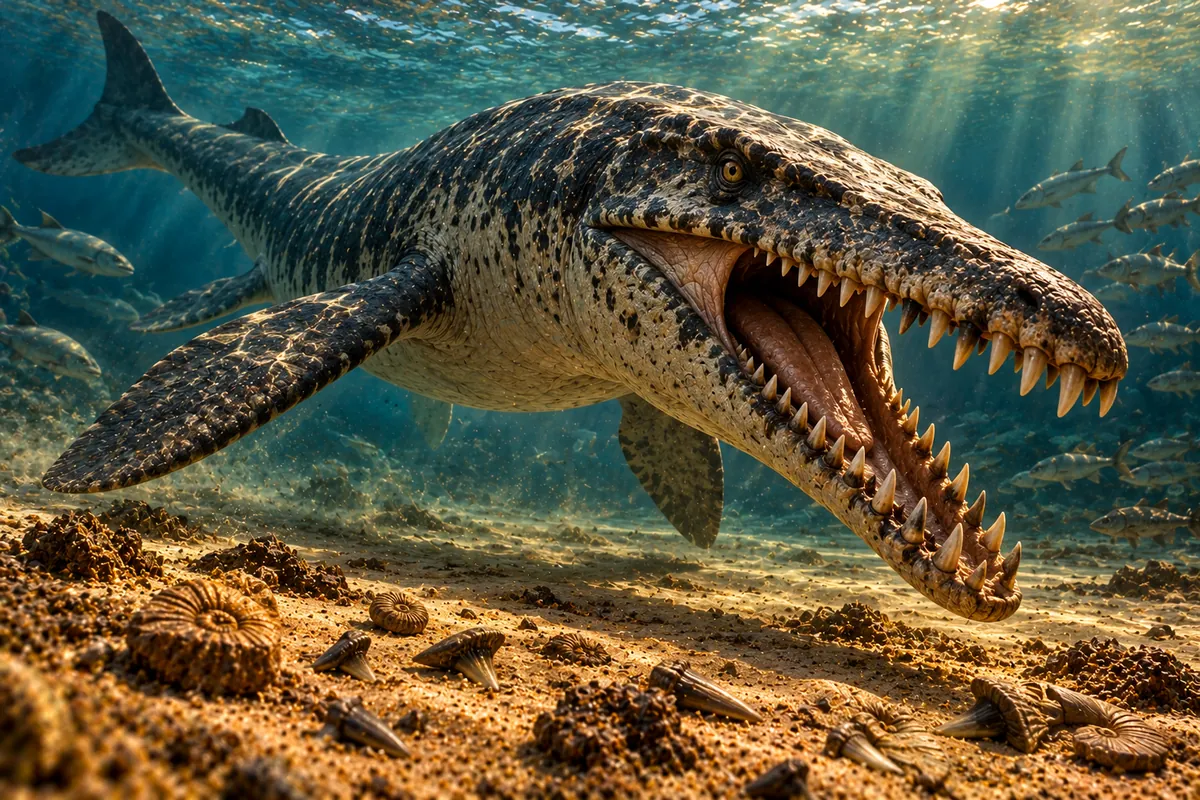
Reading the tooth shape
- Cutting teeth (Mosasaurus beaugei and similar): blade-like, with two sharp keels (carinae) bearing minute serrations; the outer face shows 3–5 large flat facets[1].
- Robust conical teeth (Prognathodon, Thalassotitan): thick, heavy crowns, often with worn or broken tips from feeding on hard prey[1].
- Piercing teeth (Halisaurus, Pluridens): slender, recurved and pointed[1].
- Crushing teeth (Globidens, Carinodens): low, rounded crowns, scarcer and valued by collectors[1].
Isolated teeth often cannot be identified to species with confidence. Our labels give the genus only when the shape supports it and otherwise say “Mosasauridae indet.”
| Scientific name | Mosasauridae (Mosasaurus, Prognathodon, Halisaurus, others) |
|---|---|
| Geological age | Late Maastrichtian, Late Cretaceous (about 68–66 million years) |
| Formation | Phosphate series, upper Couche III |
| Locality in Morocco | Oulad Abdoun Basin, Khouribga Province |
| Typical size | Crowns about 1–5 cm; rooted teeth up to about 8 cm |
Grades: size, root and matrix
The trade grades mosasaur teeth on three things, and every listing states them.
- Size: measured along the curve or straight from crown tip to base. Small teeth under about 2.5 cm are sold by the hundred; teeth over 5 cm are sold in small lots or singly.
- Crown only or rooted: most teeth are shed crowns. A tooth with its natural bony root is worth considerably more.
- Loose or in matrix: teeth set in phosphate rock make attractive display pieces. Ask whether the tooth was found in that rock or placed on it.
Composite roots and other repairs
Many large teeth are sold with a “composite root”: a crown attached to a root from another tooth, or to a root shaped from filler. Crowns are also commonly glued at cracks, and tips are sometimes restored. These are accepted trade practices as long as they are disclosed. They are not acceptable when presented as natural.
How to check: look for a sharp color or texture change where crown meets root; a seam of glue or filler; a root that looks uniform, smooth or slightly plastic-like; or a fit between crown and root that is too perfect. Under a long-wave UV light, glues and many fillers fluoresce differently from fossil tooth and bone. Matrix around set teeth should be the same phosphate sand as the rest of the block. Researchers have debated even a museum type specimen from these mines over whether its teeth were added later; the original authors answered with CT scans that, they report, show original matrix inside the pulp cavities[2][3]. For high-value pieces, ask for close-up photos of every joint.
Display and care
Phosphate fossils are stable but can be brittle. Store teeth in padded boxes, keep them away from prolonged direct sun and damp, and avoid cleaning with water or solvents that can soften old glue joints. For resale, a printed card with genus, locality, age and repair status adds value and answers most customer questions before they are asked.
Wholesale mosasaur teeth
Wholesale mosasaur teeth are typically graded into lots: small crowns for gift shops and education kits, mid-size teeth for retail display boxes, and large rooted teeth for collectors. Approved accounts get tiered discounts by quantity; apply for a wholesale account or request a quote for a mixed order. Bulk lots are also listed under wholesale lots. Each lot states whether it contains natural, repaired or composite-root teeth.
For larger pieces, see mosasaur skulls & jaws. Pair mosasaur teeth with shark teeth from the same phosphate beds, or browse all mosasaur fossils.
References
- Bardet, N., Fischer, V., Jalil, N.-E., Khaldoune, F., Khadiri Yazami, O., Pereda-Suberbiola, X. & Longrich, N. (2025). Mosasaurids bare the teeth: an extraordinary ecological disparity in the Phosphates of Morocco just prior to the K/Pg crisis. Diversity 17(2): 114. doi:10.3390/d17020114
- Sharpe, H. S., Powers, M. J. & Caldwell, M. W. (2024). Reassessment of Xenodens calminechari with a discussion of tooth morphology in mosasaurs. The Anatomical Record. doi:10.1002/ar.25612
- Longrich, N. R., Bardet, N., Jalil, N.-E., Pereda-Suberbiola, X., Schulp, A. & Ghamizi, M. (2025). New information on the morphology and tooth replacement of Xenodens calminechari (Squamata: Mosasauridae), a unique mosasaurid from the Maastrichtian Phosphates of Morocco. Diversity 17(12): 819. doi:10.3390/d17120819
Frequently asked questions
Are mosasaur teeth with roots real?
Many are fully natural, but a large share of rooted teeth in the trade have a composite root: a crown attached to a root from another tooth, or to a sculpted filler root. That is acceptable only when disclosed. Every rooted tooth we list is labeled natural, repaired or composite, and buyers should ask for close-up photos of the crown-root joint before ordering.
How can I tell if a mosasaur tooth is repaired?
Look for a change in color or texture at cracks or at the crown-root junction, a visible glue seam, or a root that looks too smooth and uniform. A long-wave UV light helps, because glues and fillers usually glow differently from fossil enamel and bone. Teeth set in rock should sit in matching phosphate matrix, not a mixed paste.
What sizes of wholesale mosasaur teeth are available?
Wholesale lots are graded by length, from small crowns under about 2.5 cm sold by the hundred to large teeth over 5 cm sold in smaller lots. Approved wholesale accounts see lot prices and tiered quantity discounts. For specific grades or a mixed order, use the Request a Quote form.
Which mosasaur species do these teeth come from?
The Moroccan phosphates hold at least fifteen mosasaur species. Most teeth in the trade come from large mosasaurines such as Mosasaurus and Prognathodon, with fewer slender Halisaurus teeth and rare rounded Globidens teeth. Many isolated teeth cannot be named to species, so we only give a genus where the shape clearly supports it.