
Morocco’s phosphate seas
Most marine reptile fossils from Morocco come from the phosphate deposits of the Oulad Abdoun Basin around Khouribga and, to a lesser extent, the Ganntour Basin near Ben Guerir. These beds formed on a shallow sea floor along the edge of the Atlantic. The vertebrate-bearing phosphate series runs from the base of the Maastrichtian (latest Cretaceous) to the Ypresian (early Eocene), a condensed record covering roughly 24 million years[1][2].
That time span matters to buyers. The mosasaurs and plesiosaurs come from the Cretaceous levels, mainly the upper Maastrichtian bed that miners call Couche III. Most of the marine crocodyliforms (dyrosaurids) come from the Paleocene and Eocene levels above it, after the mass extinction that ended the Cretaceous[4].

What lived in these waters
The late Maastrichtian sea off Morocco held one of the richest marine reptile faunas known from any single place. At least fifteen coeval mosasaur species have been described, ranging from species about 2 m long to apex predators of 9–10 m such as Thalassotitan atrox[1][3]. Long-necked elasmosaurid plesiosaurs, sea turtles, sharks and bony fishes shared the same waters.
| Main groups | Mosasaurs, plesiosaurs (elasmosaurids), dyrosaurid crocodyliforms |
|---|---|
| Geological age | Maastrichtian (Late Cretaceous) to Ypresian (early Eocene) |
| Formation | Phosphate series of the Oulad Abdoun and Ganntour basins |
| Locality in Morocco | Khouribga Province (Sidi Daoui, Sidi Chennane and nearby mines); Ben Guerir area |
| Typical pieces in the trade | Isolated teeth, vertebrae, jaw sections, skulls |
Reading a marine reptile label
Names in the fossil trade often run ahead of the science. Many older labels use genus names that specialists have since revised, and isolated teeth or vertebrae can rarely be pinned to a single species. A careful label gives the family or genus that the shape supports, the mine or basin, and the stratigraphic level. When a seller names a rare species from a loose tooth, ask what feature the identification rests on.
Shop marine reptile fossils by group
- Mosasaur fossils: teeth, vertebrae, jaws and skulls of the dominant marine predators of the latest Cretaceous.
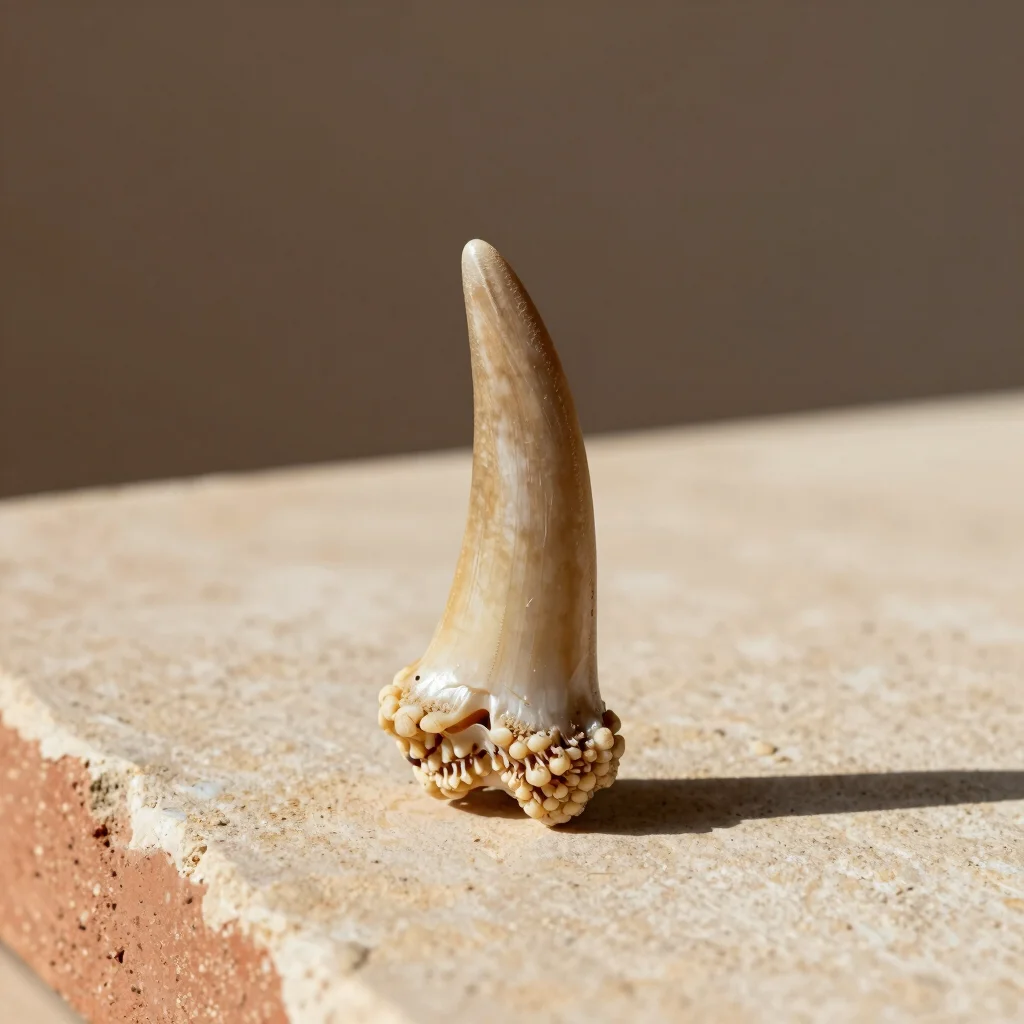
- Mosasaur teeth: the core wholesale item, graded by size and sold loose or in matrix.
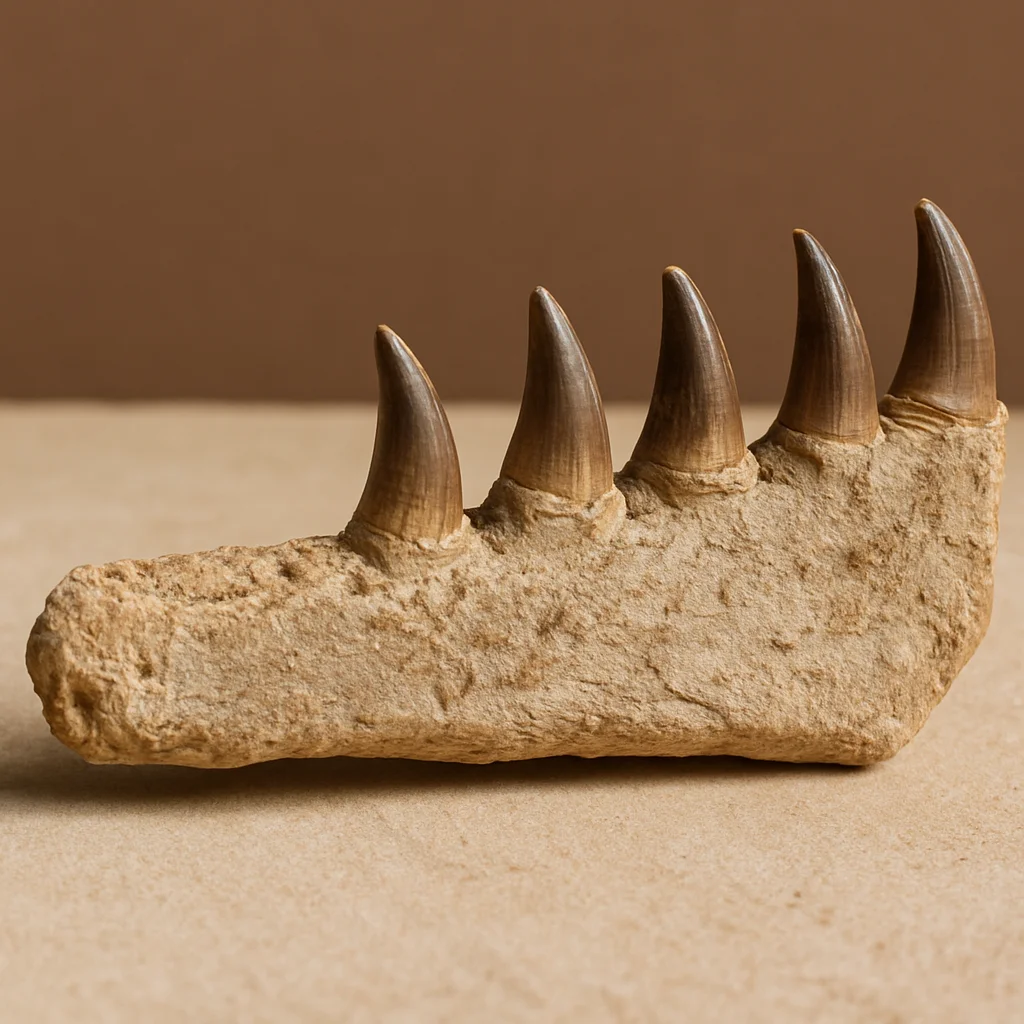
- Mosasaur skulls & jaws: display pieces, each with a written restoration statement.
- Plesiosaur fossils: elasmosaurid teeth and vertebrae from the same phosphate beds.
- Crocodile fossils: dyrosaurids from the phosphates and freshwater crocodyliforms from the Kem Kem beds.
Buying marine reptile fossils wholesale
Teeth and vertebrae from the phosphates are produced in volume, which makes them a steady line for rock shops, museum stores and online resellers. Larger pieces are a different market: jaws and skulls are rarely found complete and are usually prepared, repaired or assembled before sale. Every listing on FossilSupplier.com states locality, geological age, size, weight and whether the piece is natural, repaired or restored, so you know what you are stocking.
Approved trade buyers can apply for a wholesale account to see lot pricing with tiered quantity discounts, or send a request for a quote for mixed orders. Marine reptile fossils pair well with shark teeth and Enchodus teeth from the same mines. All exports travel with legal export paperwork; see shipping for details.
References
- Bardet, N., Fischer, V., Jalil, N.-E., Khaldoune, F., Khadiri Yazami, O., Pereda-Suberbiola, X. & Longrich, N. (2025). Mosasaurids bare the teeth: an extraordinary ecological disparity in the Phosphates of Morocco just prior to the K/Pg crisis. Diversity 17(2): 114. doi:10.3390/d17020114
- Yans, J., Amaghzaz, M., Bouya, B., Cappetta, H., Iacumin, P., Kocsis, L., Mouflih, M., Selloum, O., Sen, S., Storme, J.-Y. & Gheerbrant, E. (2014). First carbon isotope chemostratigraphy of the Ouled Abdoun phosphate Basin, Morocco; implications for dating and evolution of earliest African placental mammals. Gondwana Research 25(1): 257–269. doi:10.1016/j.gr.2013.04.004
- Longrich, N. R., Jalil, N.-E., Khaldoune, F., Khadiri Yazami, O., Pereda-Suberbiola, X. & Bardet, N. (2022). Thalassotitan atrox, a giant predatory mosasaurid (Squamata) from the upper Maastrichtian phosphates of Morocco. Cretaceous Research 140: 105315. doi:10.1016/j.cretres.2022.105315
- Jouve, S., Bouya, B. & Amaghzaz, M. (2008). A long-snouted dyrosaurid (Crocodyliformes, Mesoeucrocodylia) from the Paleocene of Morocco: phylogenetic and palaeobiogeographic implications. Palaeontology 51(2): 281–294. doi:10.1111/j.1475-4983.2007.00747.x
Frequently asked questions
How old are Moroccan marine reptile fossils?
The phosphate series of the Oulad Abdoun Basin spans from the start of the Maastrichtian, about 72 million years ago, to the early Eocene. Mosasaurs and plesiosaurs come from the Late Cretaceous levels, mostly the upper Maastrichtian, around 66 to 68 million years old. Most dyrosaurid crocodyliforms come from the younger Paleocene and Eocene beds.
Are marine reptiles dinosaurs?
No. Mosasaurs were giant marine lizards related to monitors and snakes, plesiosaurs belong to a separate group called sauropterygians, and dyrosaurids are relatives of crocodiles. They lived at the same time as some dinosaurs, but none of them are dinosaurs. For Moroccan dinosaur material, see our dinosaur fossils category.
Can I buy marine reptile fossils in bulk for my shop?
Yes. Mosasaur teeth, plesiosaur teeth and vertebrae are available as graded wholesale lots for approved trade accounts, with tiered discounts by quantity. Apply for a wholesale account to see lot prices, or use the Request a Quote form for mixed orders that combine marine reptiles with shark teeth or other Moroccan fossils.
Is it legal to import Moroccan fossils to the USA or Europe?
Our shipments leave Morocco with legal export paperwork, which customs authorities in the USA and Europe may ask to see. Import rules can differ by country, so trade buyers should confirm any local requirements with their customs broker. Our shipping page explains the documents that travel with each order.