
The “saber-toothed herring” that was not a herring
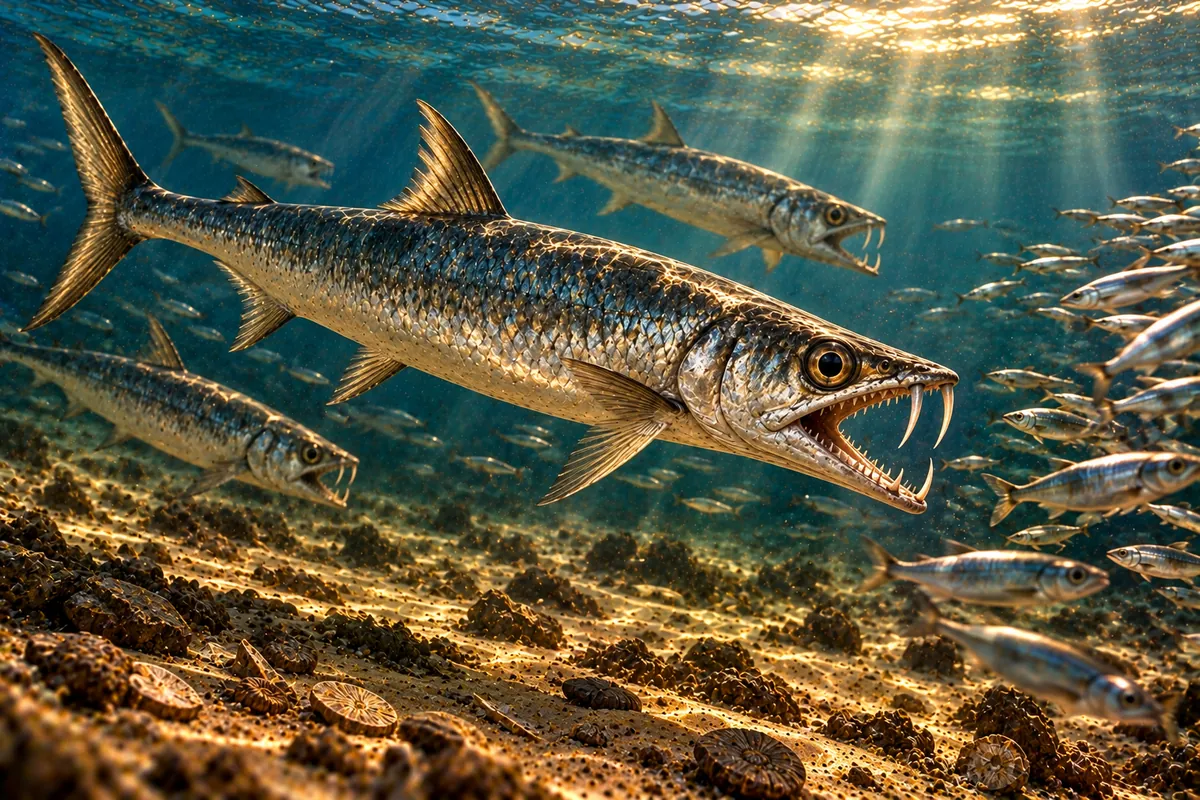
Enchodus was a predatory bony fish of the Late Cretaceous, found in marine rocks across much of the world. Collectors call it the “saber-toothed herring”, but the nickname is misleading: Enchodus belongs to the family Enchodontidae within the Aulopiformes, the group that today includes lizardfishes and lancetfishes, and is not a close relative of herrings.
What made it famous are its fangs. Large, curved teeth sat at the front of the jaws and on the palatine bones in the roof of the mouth. In the largest species these palatine fangs could exceed 6 cm. Like other teeth in the jaw, the fangs were replaced as the fish grew, which helps explain why they are so common as fossils. The size and shape of the palatine fang are often used to separate species, so an isolated Enchodus tooth is a genuinely informative fossil [2].
Enchodus in Morocco and North Africa
Arambourg’s monograph on the vertebrates of the North African phosphates described several Enchodus species from Moroccan beds [1]. Species commonly cited from the Maastrichtian of the Oulad Abdoun Basin include E. libycus, E. elegans and E. bursauxi. A 2017 study describing a new species from Egypt reviews earlier Enchodus records from countries around the Tethys, including Morocco [2].
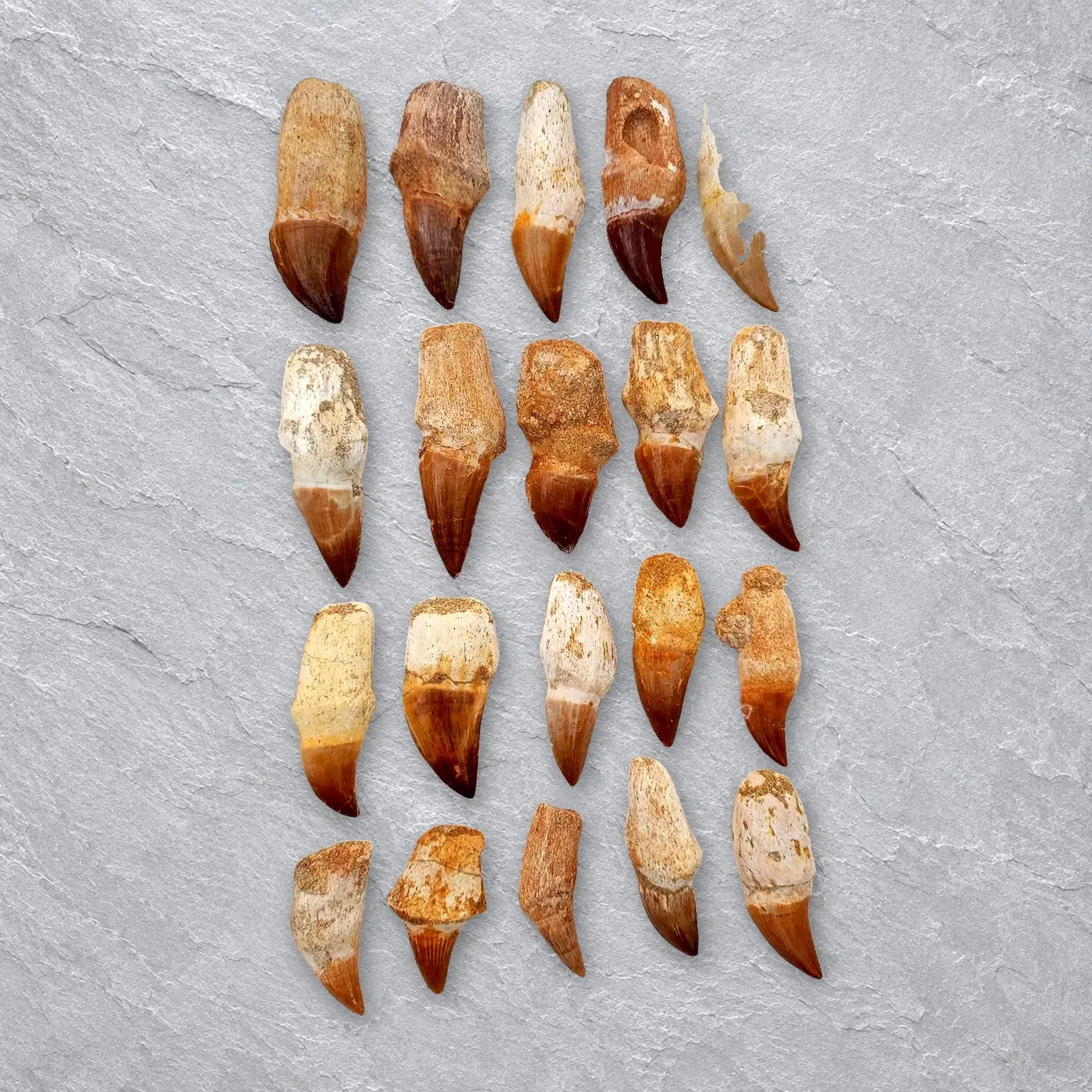
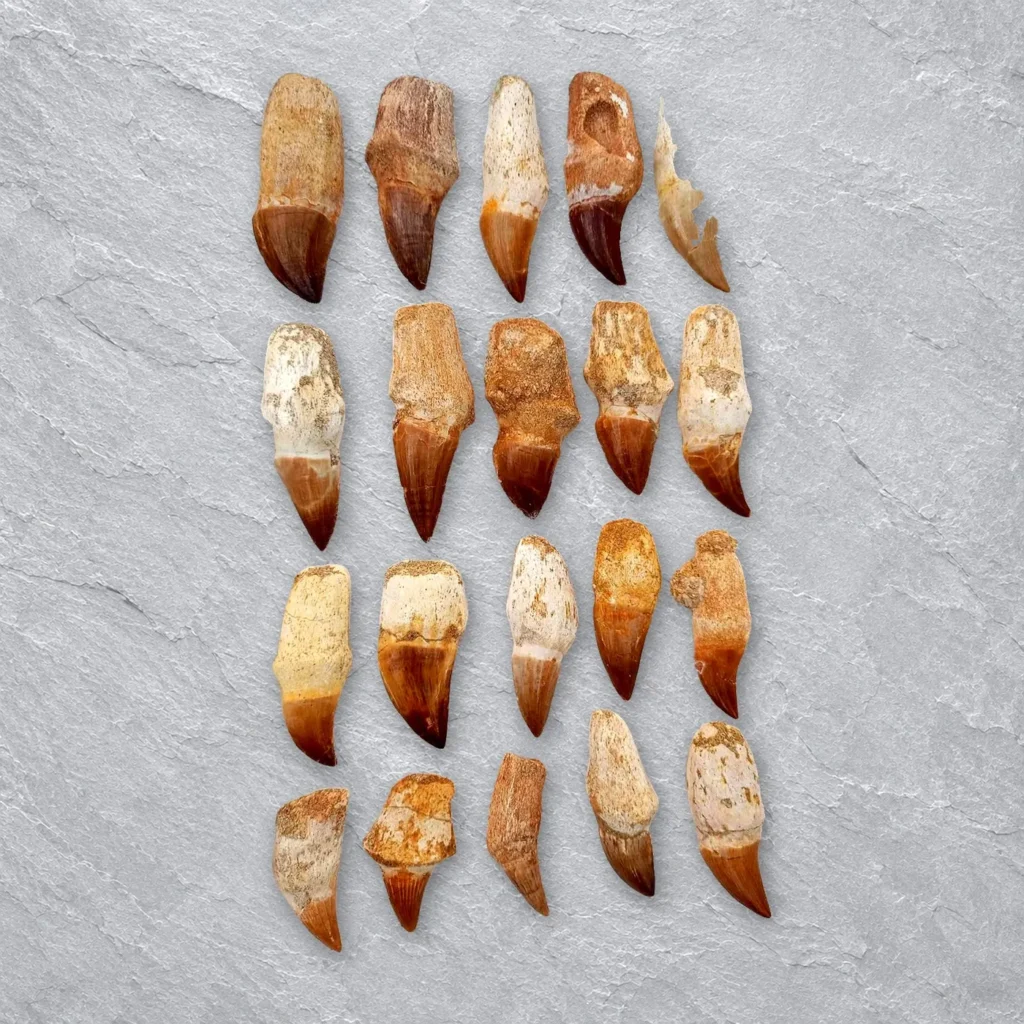
Most Moroccan Enchodus teeth sold today are isolated palatine and jaw fangs from the Maastrichtian phosphate beds near Khouribga, recovered with the Squalicorax and mosasaur teeth of the same layers.
Key facts
| Scientific name | Enchodus spp. (e.g. E. libycus) |
|---|---|
| Family | Enchodontidae (Aulopiformes) |
| Geological age | Maastrichtian, Late Cretaceous (about 72–66 million years) |
| Formation | Moroccan phosphate series, Cretaceous levels |
| Locality in Morocco | Oulad Abdoun Basin, Khouribga area |
| Typical size | about 1.5–5 cm (0.6–2 in) fang length |
How to judge an Enchodus tooth
- Shape: a slender, curved, compressed fang, often with a cutting edge and a polished, glossy surface. The base may show the area of attachment to bone.
- Completeness: the tip is the first part of an Enchodus tooth to break. A sharp, complete tip is the main mark of quality.
- Repairs: long fangs often break in the middle and are glued. A thin straight line around the fang is usually a repair; disclosed repairs are acceptable. Our listings state natural, repaired or restored.
- Fangs in matrix: “Enchodus fang in rock” pieces are popular. Some are natural, others are loose fangs glued onto phosphate matrix. Look for glue at the contact and matrix that differs from the sediment on the tooth.
- Species labels: species-level names on isolated fangs are often guesses. “Enchodus sp.” is the honest default.
Enchodus in the Cretaceous food web
Enchodus was both predator and prey. Its large eyes, long body and fangs suggest an active hunter of smaller fish and soft-bodied animals. At the same time, it was itself prey for larger fishes and marine reptiles. In the Moroccan phosphates every Enchodus tooth comes from a sea shared with Squalicorax and the large mosasaurs that may have preyed on it.
Species ranged from a few centimeters to well over a meter in length, so fang size in a lot reflects both the age of the fish and the species. Small fangs are not “lower quality”; they are simply from smaller fish.
Enchodus teeth in wholesale lots
The Enchodus tooth is one of the most cost-effective “wow” fossils for a shop: dramatic, inexpensive per piece, and easy to explain as a fanged sea predator from the age of dinosaurs. They are typically supplied in graded lots by length, with a separate grade for long, complete fangs. Approved trade buyers see lot prices and quantity discounts after they apply for a wholesale account; custom mixes with ray tooth plates or shark teeth can be arranged through Request a Quote. See all Moroccan fish fossils.
References
- Arambourg, C. (1952). Les vertébrés fossiles des gisements de phosphates (Maroc–Algérie–Tunisie). Notes et Mémoires du Service Géologique du Maroc 92: 1–372. shark-references.com bibliographic record
- Holloway, W. L., Claeson, K. M., Sallam, H. M., El-Sayed, S., Kora, M., Sertich, J. J. W. & O’Connor, P. M. (2017). A new species of the neopterygian fish Enchodus from the Duwi Formation, Campanian, Late Cretaceous, Western Desert, central Egypt. Acta Palaeontologica Polonica 62(3): 603–611. doi:10.4202/app.00331.2016
Frequently asked questions
Was Enchodus really a herring?
No. The nickname saber-toothed herring is popular but misleading. Enchodus belongs to the extinct family Enchodontidae within the Aulopiformes, the group that today includes lizardfishes and lancetfishes. It was a fast predatory fish with large fangs, not a plankton-feeding herring.
How big was Enchodus?
Size varied greatly between species. Small species were only a few centimeters long, while the largest, such as Enchodus petrosus from North America, reached a meter or more, with palatine fangs over 6 centimeters. Moroccan fangs typically measure about 1.5 to 5 centimeters.
Are Enchodus fangs in matrix natural?
Some are, many are not. Loose fangs are sometimes glued onto pieces of phosphate rock to make a more attractive display. Check for glue at the contact and for rock that differs in color or texture from the sediment on the fang. A reputable seller will tell you which type you are buying.