Mosasaurs of the Moroccan phosphates
Mosasaurs were large marine lizards, closer to monitor lizards and snakes than to dinosaurs, that ruled Late Cretaceous seas. The upper Maastrichtian phosphates of the Oulad Abdoun and Ganntour basins have yielded at least fifteen mosasaur species living side by side, the richest mosasaur fauna known from one region[1]. These mosasaur fossils date to the last few million years before the end-Cretaceous extinction.
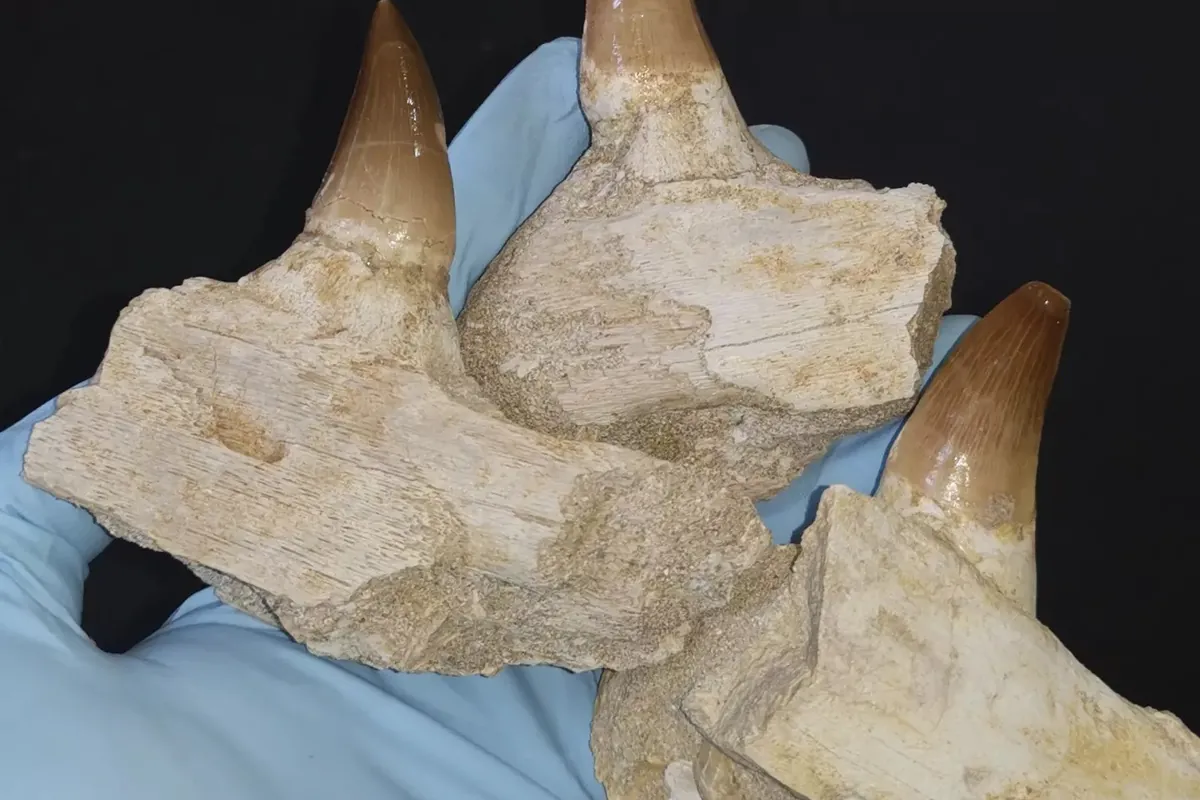
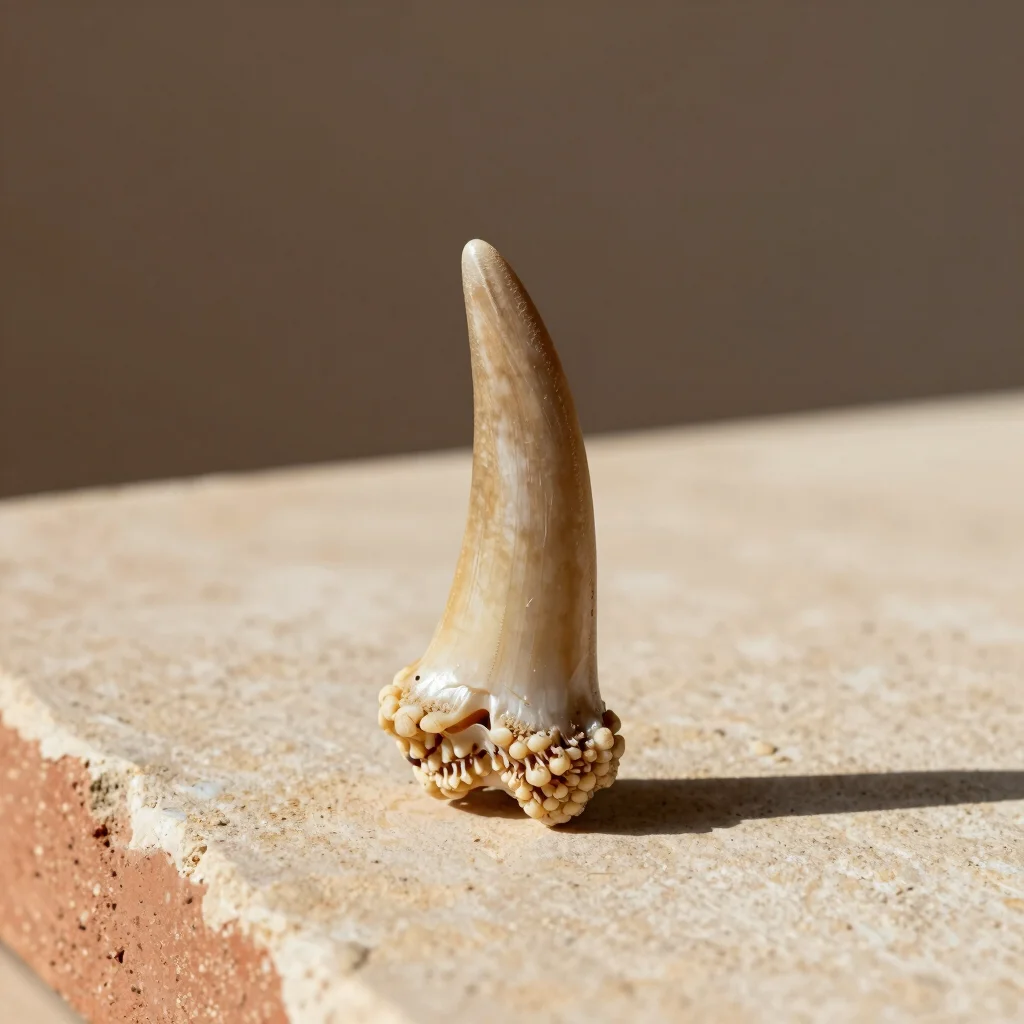
The species divided their food supply by tooth shape. Researchers group them into cutters, piercers, crushers and generalists, and found that the largest predators were never dedicated piercers[1]. For a buyer this is useful: tooth shape is the main clue to which kind of mosasaur a fossil came from, and it explains why mosasaur fossils from Morocco vary so much.
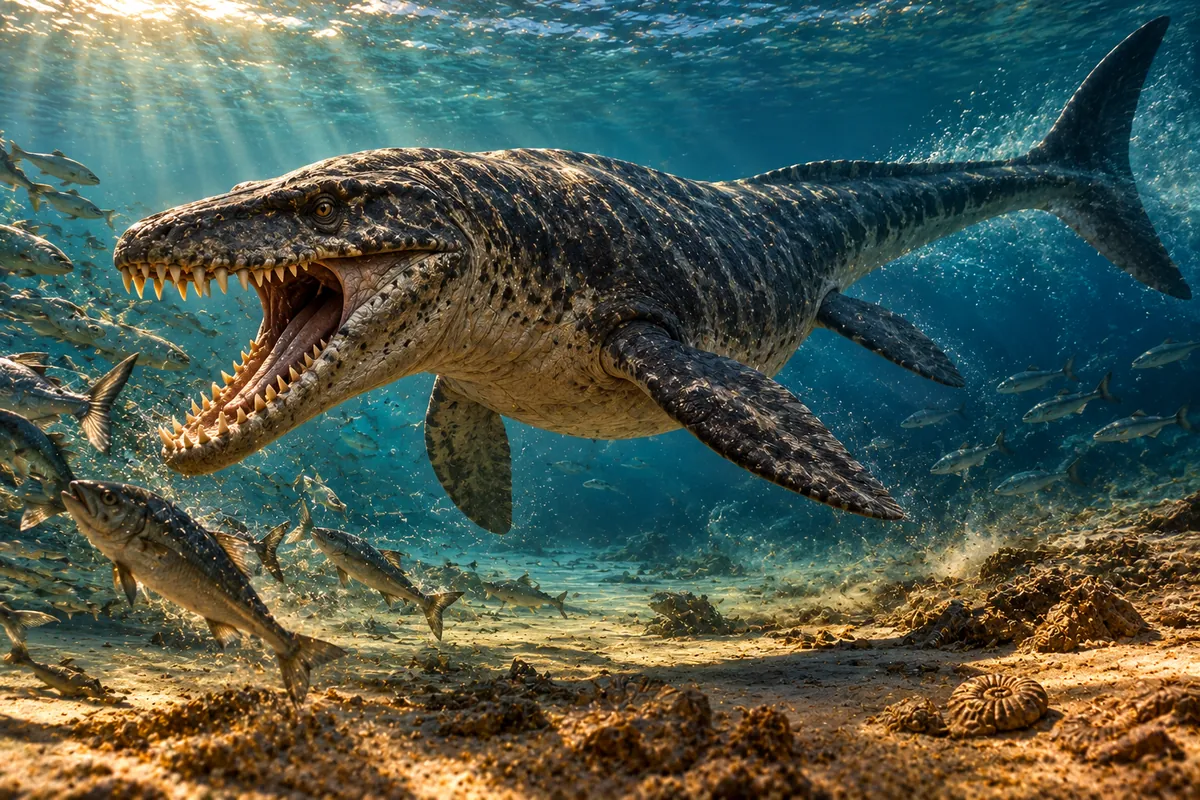
Key genera found in Morocco
- Mosasaurus beaugei: an 8–10 m cutter. Its teeth carry fine serrated keels and 3–5 flat facets on the outer face[1].
- Prognathodon currii: around 10 m or more, with massive teeth suited to crunching hard prey[1].
- Thalassotitan atrox: a 9–10 m apex predator with a skull of about 1.2–1.3 m. Its robust, heavily worn conical teeth have been compared to those of killer whales[1][2].
- Halisaurus arambourgi: a slender 3–4 m piercer with small, recurved teeth[1].
- Gavialimimus ptychodon: a plioplatecarpine about 6 m long, described by Arambourg in 1952 and long sold as “Platecarpus” ptychodon[1].
- Globidens and Carinodens: shell-crushers with rounded, button-like teeth, from 2.5 m up to 5–6 m[1].
| Scientific name | Mosasauridae (several genera) |
|---|---|
| Geological age | Late Maastrichtian, Late Cretaceous (about 68–66 million years) |
| Formation | Phosphate series, upper Couche III |
| Locality in Morocco | Oulad Abdoun Basin, Khouribga Province; Ganntour Basin |
| Typical size | Animals about 2–10 m long; teeth roughly 1–8 cm |
Larger plioplatecarpines and tylosaurines lived here too. Khinjaria acuta reached an estimated 8 m with a skull of about 90 cm, and the tylosaurine Hainosaurus boubker was a large generalist with tall, robust conical teeth[1].
Evidence of how they fed
Beyond tooth shape, the phosphates preserve direct clues to mosasaur diets. Teeth of Thalassotitan are often chipped and worn down, and bones of several other animals from the same beds, including other mosasaurs, an elasmosaurid plesiosaur, a sea turtle and a fish, show acid etching that may come from digestion. The authors read this as possible prey of Thalassotitan, an interpretation rather than a direct observation[2].
Vertebrae and other bones
Vertebrae are the most common mosasaur fossils after teeth and are offered singly or as short associated runs. They have a cup-and-ball joint between centra, and their size gives a rough idea of the animal’s length. Ask whether a run of vertebrae came from one animal or was assembled from several.
Teeth versus jaws and skulls
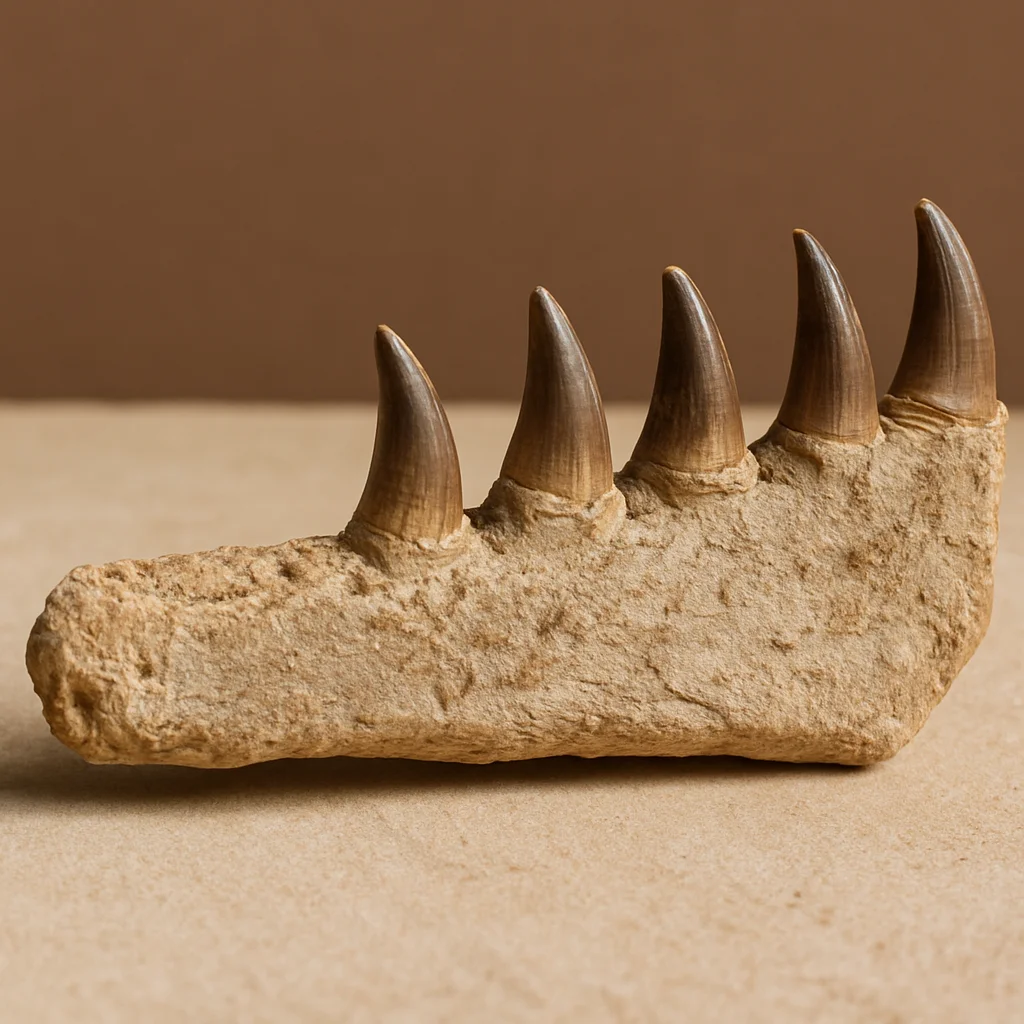
Isolated teeth make up most of the trade and are the best value for resellers; see mosasaur teeth. Jaw sections and skulls are rarer display pieces. Because complete jaws are seldom found, many are assembled from several individuals or have teeth set into them after collection. Even a scientific type specimen from these mines has been questioned on this basis[3]. Read how we disclose this in mosasaur skulls & jaws.
Every listing of mosasaur fossils names the genus only where tooth or bone shape supports it, and states locality, age, size, weight and restoration. Trade buyers can apply for a wholesale account or browse other marine reptile fossils.
References
- Bardet, N., Fischer, V., Jalil, N.-E., Khaldoune, F., Khadiri Yazami, O., Pereda-Suberbiola, X. & Longrich, N. (2025). Mosasaurids bare the teeth: an extraordinary ecological disparity in the Phosphates of Morocco just prior to the K/Pg crisis. Diversity 17(2): 114. doi:10.3390/d17020114
- Longrich, N. R., Jalil, N.-E., Khaldoune, F., Khadiri Yazami, O., Pereda-Suberbiola, X. & Bardet, N. (2022). Thalassotitan atrox, a giant predatory mosasaurid (Squamata) from the upper Maastrichtian phosphates of Morocco. Cretaceous Research 140: 105315. doi:10.1016/j.cretres.2022.105315
- Sharpe, H. S., Powers, M. J. & Caldwell, M. W. (2024). Reassessment of Xenodens calminechari with a discussion of tooth morphology in mosasaurs. The Anatomical Record. doi:10.1002/ar.25612
Frequently asked questions
What is a mosasaur?
Mosasaurs were marine lizards of the Late Cretaceous, related to today's monitor lizards and snakes. They had paddle-like limbs, a tail fin and jaws lined with replaceable teeth. In Morocco they ranged from species about 2 m long to apex predators of around 10 m. They are not dinosaurs, although they lived at the same time.
Which mosasaur species are most common in Moroccan fossils?
Teeth of large mosasaurines, such as Mosasaurus and Prognathodon, and of the slender Halisaurus and the plioplatecarpine Gavialimimus (often labeled Platecarpus in the trade) are the most frequently offered. Rounded Globidens and Carinodens crushing teeth are scarcer. Many isolated teeth cannot be named to species with certainty, so we label genus only where the tooth shape supports it.
How old are Moroccan mosasaur fossils?
They come from the upper Maastrichtian phosphate beds, the last stage of the Cretaceous, roughly 68 to 66 million years old. Those beds lie just below the boundary that marks the mass extinction that ended the age of dinosaurs and mosasaurs.